
Arrest Warrants in Wabash County
Indiana Code 35-33-2-1 lays out how a Wabash County arrest warrant gets issued. File an indictment, and if the accused has not been arrested or brought in, the court issues the warrant outright. No separate probable-cause ruling is needed on that path. A prosecutor's information works differently. There, a judge weighs probable cause before any warrant issues. Both charging routes land in the same place locally. Wabash Circuit Court and Wabash Superior Court handle the county's criminal cases. The Wabash County Clerk keeps their records and states that the office issues arrest warrants. What the county does not publish is a public warrant roster, a bond chart, or a warrant division of its own. Status has to be confirmed case by case, and Wabash County makes that the practical route.
Wabash Charging Paths to Warrants
The charge itself shapes the warrant decision in Wabash County. An indictment comes from a grand jury. An information is a charging document the prosecutor files directly. Under Indiana law, the indictment path skips the separate probable-cause finding that an information requires. Either way, the court record names the charge and the issuing court, so read it closely before acting on anything.
- Probable cause
- Legally sufficient facts supporting the required judicial finding.
- Information
- A prosecutor-filed criminal charge.
- Indictment
- A charge returned by a grand jury.
- Issuing court
- The court that controls the warrant and case instructions.
The official Indiana Code holds the governing text for anyone who wants the statute verbatim. A public MyCase entry can summarize events, but the Clerk's record and the court's order control. Local filing rules matter too. Criminal cases split between Circuit and Superior Court, so follow the court code in the case rather than guessing from the charge name. The uniform case number is your key. It identifies county 85, the court, the filing year, the case type, and the sequence. Write it down before calling the Clerk, because it pins down the right file and separates you from people with similar names. Remember that the charging entry is only part of the story. A later chronology entry may show service, return, release, bond, or a recall. Read those events in date order and ask which one controls now. Wabash County publishes no arrest-warrant update schedule, so a current answer from the issuing Wabash County court beats any older screen.
What a Wabash County Arrest Warrant Contains
A public Wabash County case record can show the court, the uniform Indiana case number, the charge, its classification, the filing event, the warrant event, who issued it, bond information, and status history. Displays vary. The county publishes no fixed warrant-row format, so confirm a missing field with the Clerk instead of guessing at it.
| Case identity | Uniform case number, court name, and court code |
|---|---|
| Charge | Offense description and felony or misdemeanor class |
| Warrant event | Issue, service, return, recall, or other chronology entry |
| Authority | Issuing court or judge when publicly shown |
| Bond | Type or amount if public and current; confirm with court |
| Status | Active, served, recalled, quashed, or resolved when recorded |
Wabash Arrest Warrant Access Limits
MyCase carries public, non-confidential information from Odyssey courts. It is not a complete warrant repository for Wabash County. Sealed, confidential, juvenile, expunged, investigative, older, or newly entered records may not appear at all. Indiana Access to Court Records Rule 5 can also exclude cases tied to investigative requests, such as search-warrant applications.
Key point: A blank MyCase search or absent sheriff list does not prove that Wabash County has no arrest warrant in the matter.
When a Wabash County court document is missing, use the Indiana court-record request process. The Sheriff's Department holds its own service records, under different access rules.
How Arrest Warrants Are Served
Several agencies can execute a valid warrant in Wabash County. The Wabash County Sheriff's Department, the Wabash Police Department, and Indiana State Police all act within their lawful authority. The Sheriff's public site posts no searchable roster and no dedicated warrant-unit hours. For law-enforcement confirmation or a surrender the court has approved, call the Sheriff's official contact at (260) 563-8891. Custody is only one stage, though. Booking, an initial hearing, release conditions, and bond decisions follow their own rules and court orders. No Wabash County source publishes a universal booking timetable. Anyone planning to appear should ask where to report, what identification to bring, whether booking happens immediately, and whether counsel can coordinate the appearance.
Wabash Warrant Service Routes
Boundaries matter here, because the court controls a Wabash County warrant while police execute it. The City of Wabash site offers civic routing information, not a warrant lookup.

City Hall cannot answer for City Court, the county trial courts, or police confirmation. The city facilities directory separates Wabash City Court from the Police Department.
Send court-status questions to the issuing Wabash County court and service questions to the right police agency. The LaFontaine public-safety page documents the town marshal and deputies.
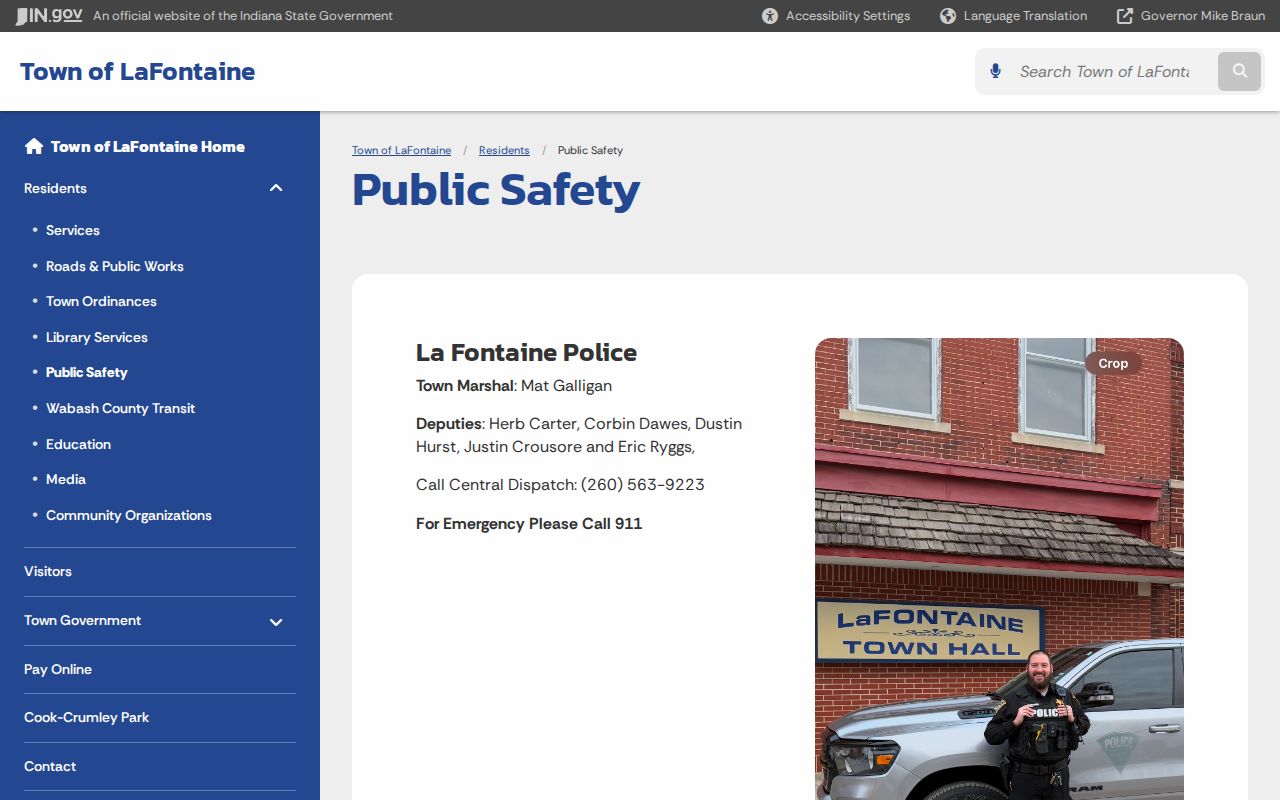
A marshal's number is not a line to the issuing Wabash County court. Use it only for the enforcement role the town itself documents.
Arrest Warrant vs Summons vs Bench Warrant
Three tools get confused in Wabash County. An arrest warrant authorizes custody in a charged criminal case. A summons orders an appearance without taking anyone in. A bench warrant usually follows a missed duty in a case already open. Indiana law allows a misdemeanor summons in some matters, but a failure to appear can still bring an arrest warrant when the required cause exists.
| Feature | Arrest Warrant | Summons | Bench Warrant |
|---|---|---|---|
| What it orders | Custody | Appearance without initial arrest | Custody after missed duty |
| Usual basis | Indictment or probable cause | Eligible charge and notice | Failure to appear or comply |
| First contact | Issuing court and counsel | Court listed on summons | Court that set the missed duty |
| Response | Confirm, seek advice, arrange appearance | Appear on date | Ask about reset or recall |
Confirm Your Wabash Arrest Warrant
MyCase is the fastest place to start. Search by legal name, case number, or citation, then narrow the results to a Wabash County court. Write down the case number. Save every warrant-related entry you see. For a city matter, call Wabash City Court at (260) 563-4946; otherwise call the Clerk at (260) 563-0661. Staff can tell you whether the order is active, served, recalled, or quashed. If they send you to law enforcement, phone that office before you arrive, and remember that an online balance alone is never final confirmation of an active warrant. Court staff handle filing and scheduling questions, while an attorney can advise on surrender, bond, defenses, and motions.
What to Do If There Is a Warrant for You
Verify first, then act. Get the order confirmed before you take any step. Ask the issuing court in Wabash County what the warrant actually permits, and talk with a lawyer about the safest lawful response. Your options may include a scheduled appearance, voluntary surrender, booking, an initial hearing, bond, or a court motion. Wabash County publishes no standard surrender form or warrant bond schedule, so each case follows its own path.
- Record the case number, issuing court, charge, and latest public event.
- Confirm current status with the court or Clerk.
- Ask counsel about surrender, bond, recall, and release.
- Call the Sheriff if the court directs coordination.
- Verify the warrant status and next date after court action.
If the court tells you to appear voluntarily, ask for specifics rather than guessing. Do not rely on a general government page for the place or time. Confirm whether you should report to the court, the jail, the sheriff, or another location, which identification to bring, and whether your lawyer can coordinate the visit. Wabash County posts no set surrender window. The instructions must come from the court and the law-enforcement office handling your warrant.
Important: Payment does not end the criminal case or guarantee release; verify the court order, other holds, and the next hearing.